

3·
15 days agoSeems like a very small update this time.
Seems like a very small update this time.

I like Proxmox for it’s first-class treatment of ZFS. You can easily run Docker/Podman on top of it or in a VM. Proxmox has some other advantages like replication and clustering, but I’d say you don’t need that in a home setup (at least I don’t).
If I had to redo my setup today, I’d probably give TrueNAS SCALE a chance though.
I can’t tell whether you’re kidding or not.
In Germany you absolutely get subpoenaed for the slightest copyright infringement. There a law firm called “Waldorf Frommer” that does all the dirty work for the so called rights holders.

Take a closer look. One is about ASPM and one about CPU governors.
Spindown and spinup unfortunately have wear on the drives and ever since I killed a bunch of desktop WD green drives that way back in the day, I’m too scared to reenable this on my (now 100TB+) NAS.
Can’t help youhere unfortunately, as I would have thought that this is the most likely cause as well.
I’m just commenting to say: Please let us know if you found a solution to the problem. I’m very interested to know what might have caused this.
I actually needed to look that up, since I didn’t know either. So, thank you, I’ve learned something new because of your question.
          d/s    The number (after merges) of discard requests
                 completed per second for the device.

          f/s    The number (after merges) of flush requests
                 completed per second for the device.  This counts
                 flush requests executed by disks. Flush requests are
                 not tracked for partitions.  Before being merged,
                 flush operations are counted as writes.
https://man7.org/linux/man-pages/man1/iostat.1.html
(Discards being TRIM operations on SSDs, I imagine.)
Yep, that was the issue.
This post reads like it’s written completely by AI, which means the software is (most likely) written completely by AI.
Edit: Also, no TLS? Are you kidding me? I’m supposed to upload my documents over an unencrypted transport?

That name is terribly close to the more popular NewPipe
dd-mm-yyyy is not an insane format, thank you.

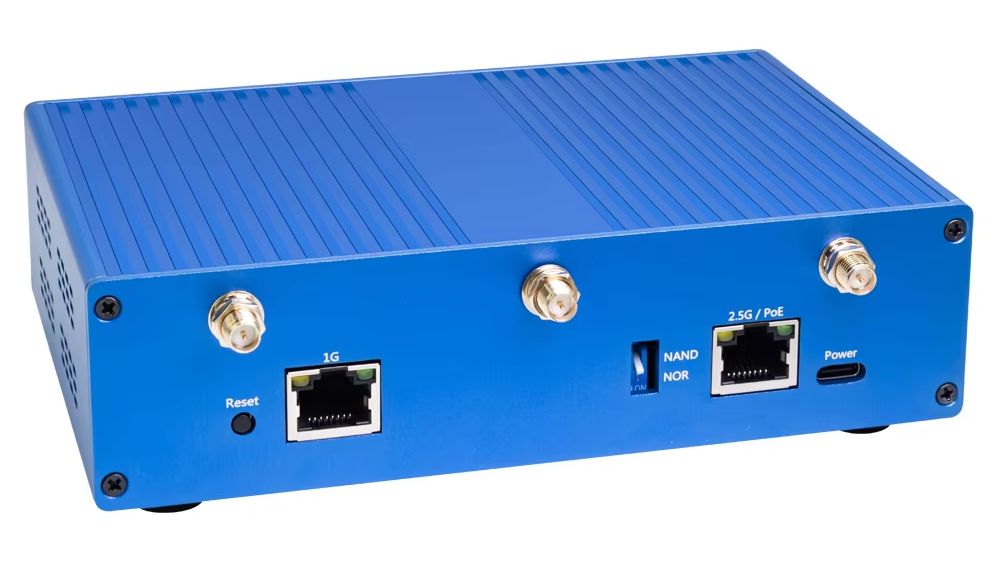
If you’ve never used OpenWrt, you might find the web UI (called LuCI) unintuitive. The OpenWrt wiki can help you out.
KDE Connect and SyncThing
Should I worry that this is essentially a security update for vulnerabilities that are (intentionally?) not explained?

You can actually use GPU hardware acceleration in Docker just fine. You only need to provide drivers (mesa) and --device /dev/dri which is implied by using --priviliged. I don’t think you need actual PCIe device passthrough like in a VFIO setup.
Do you have a writeup about this somewhere? I’d be interested in learning how that works.
Dude, you can’t even use the right abbreviation. Get lost.
your firewal
Well, blocking inbound traffic from these countires is part of my firewall. I have some services that are exposed on the internet, but I don’t want the whole world to hammer these services, scrape them and potentially exploit vulnerabilities on them. I know a VPN would be more effective here, but that’s not an option for every service.




In waiting for the Two, but apparently there’s not much talk about it anymore.